
History and conservation
A species shaped by Xochimilco.
The axolotl’s story begins in the ancient lake system of the Valley of Mexico. Modern canals, cultural memory, scientific study, and habitat conservation all meet in Xochimilco.
Water, chinampas, and a restricted home
Xochimilco is more than a point on a map.
The remaining canals and wetlands form a living cultural landscape. Urbanization, pollution, altered water systems, and introduced species have transformed the habitat available to wild axolotls.
A lake-system species
Axolotls evolved in high-altitude freshwater associated with Lakes Xochimilco and Chalco.
A changed ecosystem
Habitat fragmentation and water-quality pressure reduce the places where wild animals can persist.
Local stewardship
Conservation depends on people, working landscapes, water management, and habitat restoration within Xochimilco.
The name carries history
Axolotl comes from Nahuatl.
The animal has long been connected with stories of transformation and the figure Xolotl. Modern branding should acknowledge the origin with care and avoid presenting living traditions as decoration without context.
Language
Using the name is an opportunity to direct visitors back to its Nahuatl and Mexican roots.
Visual responsibility
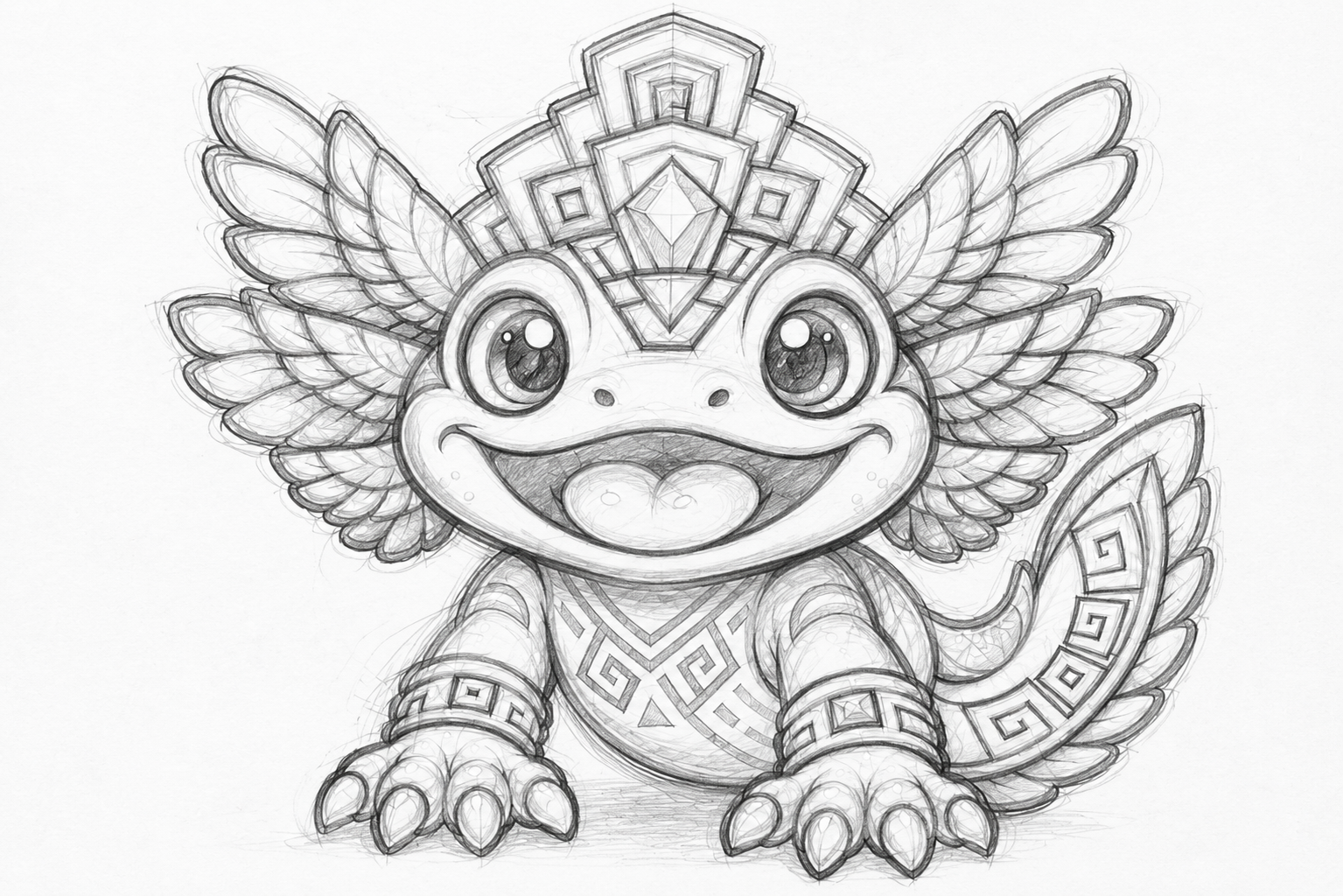
Geometric color and line work on this site are inspired by the brandmark, while the history belongs to a larger living culture.
Learn with specificity
Name Xochimilco, explain the habitat, and distinguish cultural history from simplified internet mythology.

Captive animals and wild conservation
Keep the distinction clear.
Responsible captive breeding can improve welfare and reduce pressure for collection, but a healthy pet population does not restore habitat or replace wild conservation.
Never collect from the wild
Marketplace animals must be captive-bred and documented honestly.
Support habitat work
Direct conservation attention toward Xochimilco, water quality, ecological restoration, and locally led programs.
Teach responsibility
Every listing and care guide should connect fascination with preparation, respect, and long-term stewardship.